

 Cooling
 Heating
 Plumbing
 Sewer + Drains
 Air Quality
 Coupons
 About Us
Yes, an outdoor air conditioner can often be relocated during a replacement project, but moving the condenser involves more than simply setting it on a new pad. A licensed HVAC professional should evaluate the new location, recover the refrigerant, modify the electrical and refrigerant lines, and test the system after installation to ensure it runs properly.
For homeowners in Dayton, Columbus, Cincinnati, and Northern Kentucky, relocating an A/C unit most often occurs as part of a system replacement or upgrade, especially during home additions, patio and landscaping projects, or when noise and placement issues arise. Before your project begins, have the proposed location reviewed to protect system performance, preserve service access, meet manufacturer and warranty requirements, and comply with local codes. These are all things the Logan Services Comfort Consultants will review with you during your free, in-home estimate.
This guide explains when relocating an air conditioner during replacement makes sense, how the process is handled, what to look for in a new location, expected costs and permits, and when it may be smarter to relocate or replace the system, including what to know about ductless mini-splits.
Why Would You Move an Outdoor Air Conditioning Unit?
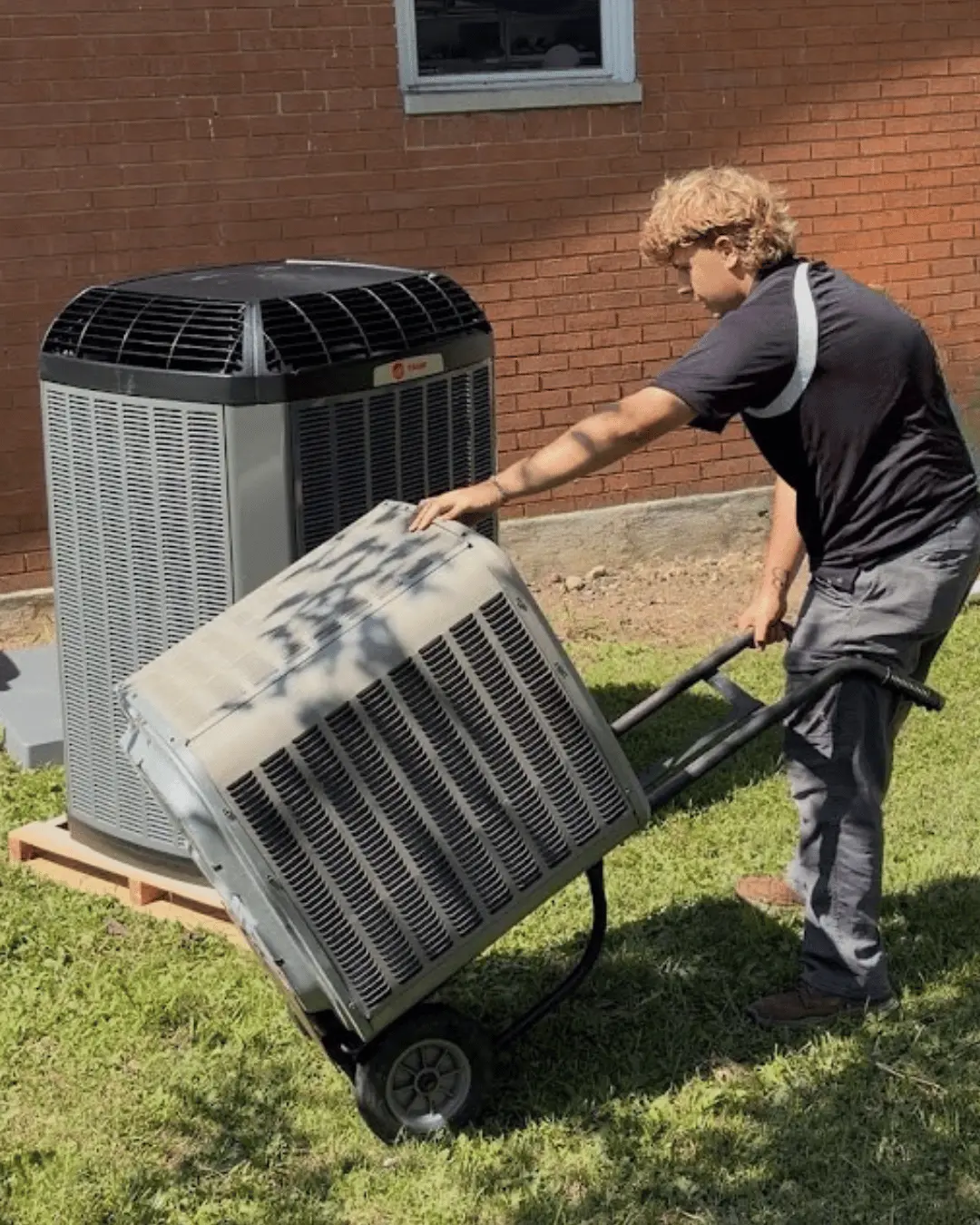
Homeowners typically consider relocating their AC condenser during replacement for several reasons:
- Building a room addition, patio, deck, pool, or outdoor living area
- Creating more space along a driveway, walkway, or side yard
- Moving equipment away from a bedroom, home office, or gathering space
- Improving access for HVAC maintenance and repair
- New HVAC systems may require larger installation space
- Correcting a location with restricted airflow, drainage problems, or overgrown landscaping
- Updating exterior layout or landscaping to improve your home’s curb appeal
Relocating during replacement allows for proper sizing and positioning of new equipment, which can improve efficiency and serviceability compared to simply reinstalling in the original location.
Can an A/C Unit Be Moved to Another Side of the House?
An A/C condenser can often be moved to another wall or side of the home during replacement if the proposed site supports proper airflow, drainage, electrical access, refrigerant piping, and future service. The HVAC contractor must confirm that the new line-set design falls within the equipment manufacturer’s requirements. In some cases, a unit can be moved just a few feet or around a corner if the new route still meets manufacturer guidelines.
There is no single maximum relocation distance that applies to every air conditioner. Approved line length, vertical rise, tubing size, refrigerant charge, and installation details vary by model, so the contractor should use the manufacturer’s specifications rather than a universal distance rule.
What Makes A/C Relocation a Professional Job?
Relocating an air conditioner during replacement involves high-voltage electricity and regulated refrigerant, so professional technicians must handle it to avoid leaks and comply with the law. Federal rules restrict the release of refrigerants, and any recovery must follow EPA requirements to prevent environmental contamination; technicians who service equipment in ways that could release refrigerant must meet applicable EPA certification requirements.
Attempting a DIY move or A/C replacement can cause potential damage to the system, which is why this complex task is best left to trained professionals. Improper work can damage the compressor, contaminate the refrigerant circuit, create leaks, or produce unsafe electrical connections. It may also affect warranty coverage and leave the system unable to cool the home correctly.
How Is an Outdoor Air Conditioner Unit Relocated During Replacement?
The exact process depends on the system and the new location, but a professional relocation during replacement generally includes the following steps.
1. Evaluate the HVAC System and New Location
One of our Comfort Consultants will assess the new equipment size and type, measure the proposed line route, review electrical needs, and confirm required clearances. This evaluation ensures the new system fits the space and meets manufacturer and local code requirements.
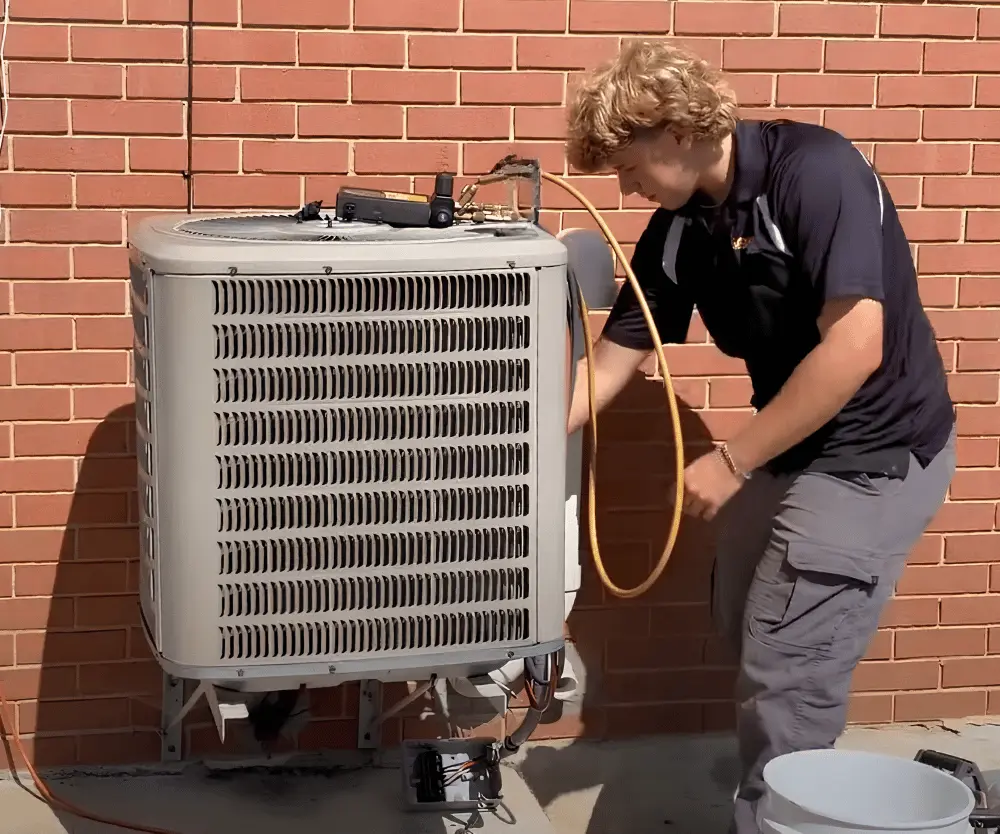
2. Recover the Refrigerant and Disconnect the Old System
During the installation, your technician shuts off power and uses approved equipment to pump and recover refrigerant from the old system before disconnecting it. Electrical connections, control wiring, and drain components are then disconnected as needed.
3. Prepare a Stable Equipment Base
The new condenser location requires a stable, level base that supports drainage and limits vibration. Our installers may use pea gravel beneath or around the pad to improve stability and water runoff. The installation must also meet manufacturer instructions and applicable local requirements.
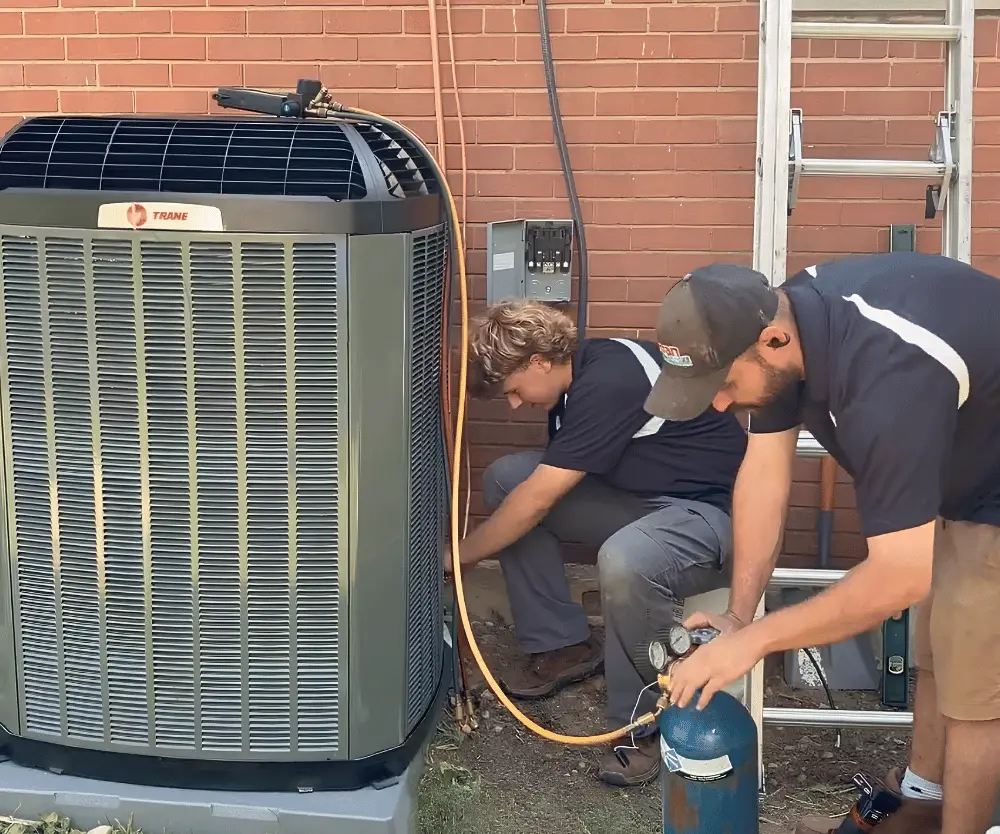
4. Install the New Condenser and New Line Set Connections
The new outdoor unit is placed on the prepared pad, and our team of HVAC technicians reroutes refrigerant tubing, electrical wiring, conduit, and control wiring according to manufacturer specifications. This often involves new line sets tailored to the new location.
5. Pressure-Test, Evacuate, and Charge the New System
Your installer will check the sealed system for leaks, remove air and moisture with a vacuum pump, and charge the system with the correct refrigerant amount. Additional refrigerant may be required when the approved line length increases.
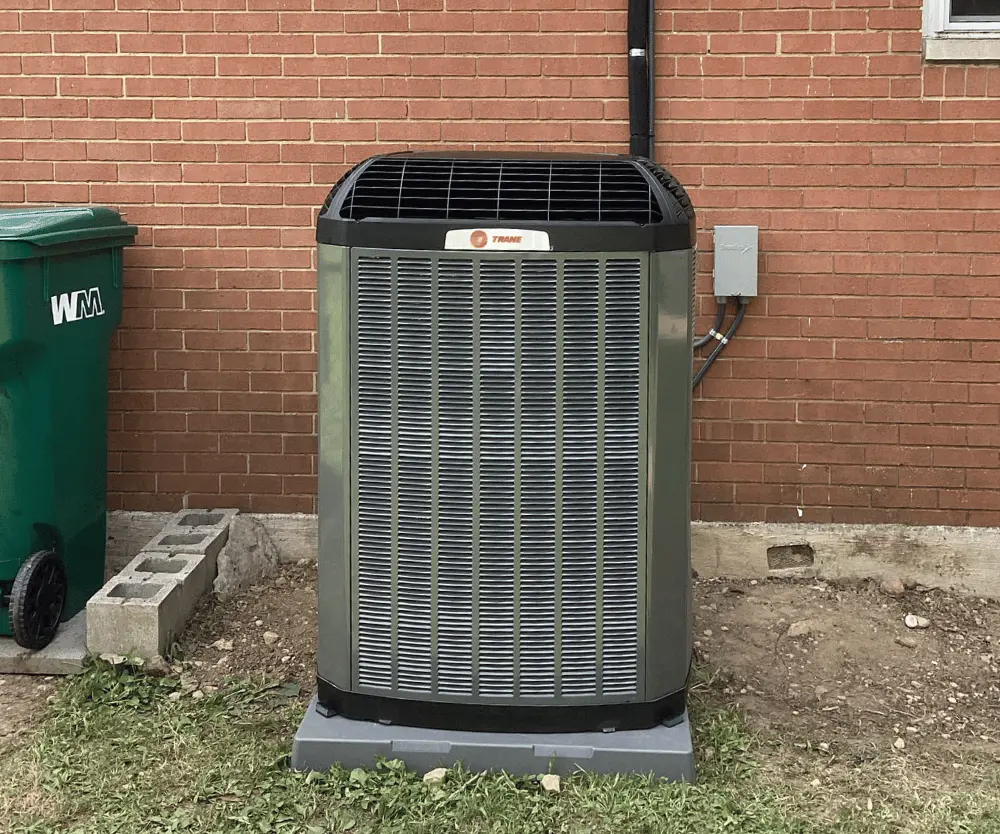
6. Start and Test the New Air Conditioner
Power is restored, and your installer verifies system operation. They will check cooling performance, electrical readings, refrigerant conditions, airflow, drainage, vibration, and noise before completing the job.
Should You Relocate When You Replace the Air Conditioner?
Relocation is generally considered part of a replacement project when the existing system no longer meets the home’s needs or must be moved for remodeling. Replacement offers better value when the system is near the end of its service life, needs frequent repairs, or already struggles to cool the home, and some homeowners choose to replace the AC and furnace simultaneously to improve efficiency and compatibility. Some homeowners also choose a new unit during relocation planning to ensure optimal performance and longevity, especially when comparing different types of AC systems and how to choose one.
A Logan Services comfort specialist can assess your system and help determine whether relocating during replacement or installing a new system in the same or different location best suits your home, project, and budget, drawing on their decades of HVAC and plumbing services in Columbus, Cincinnati, and Dayton.
What Affects the Cost to Move an AC Unit During Replacement?
Costs depend on the distance, equipment, property layout, and work required at the new location. A reliable price requires an in-home assessment because two moves of the same distance may involve different electrical, refrigerant, structural, and permitting needs.
Common cost factors include, along with how you plan to pay for the project and whether you’ll use HVAC replacement financing options:
- The horizontal distance and vertical rise between the indoor and outdoor equipment
- New refrigerant tubing, insulation, wiring, conduit, and equipment-pad materials
- Refrigerant recovery, leak testing, evacuation, and charging
- Access challenges, landscaping, fencing, or construction obstacles; easier access for technicians can reduce future service time and labor costs
- Electrical upgrades or disconnect relocation
- Permit and inspection requirements in the local jurisdiction
- The system’s age, condition, refrigerant type, and manufacturer specifications
How Do You Choose a New Location for the Condenser During Replacement?
The best location provides room for airflow, proper drainage, and easy access for future HVAC service. Manufacturer instructions, local codes, and any HOA or noise-ordinance limits should guide final placement, and ongoing air conditioner maintenance checklist tasks will be easier when technicians can readily reach the equipment.
- A qualified contractor will look for a location that:
- Maintains model-specific clearance from walls, fences, plants, other equipment, and property lines
- Allows technicians to reach electrical panels, service valves, and removable panels easily
- Prevents discharge air from recirculating into the condenser
- Provides a level base and directs water away from the home and equipment
- Avoids dryer exhaust, roof runoff, dense vegetation, and other debris sources
- Limits disruption near bedrooms and outdoor living areas without compromising performance
Shade alone should not determine condenser placement. Unrestricted airflow, correct clearances, drainage, and service access are more important than placing the unit in a shaded but enclosed area.
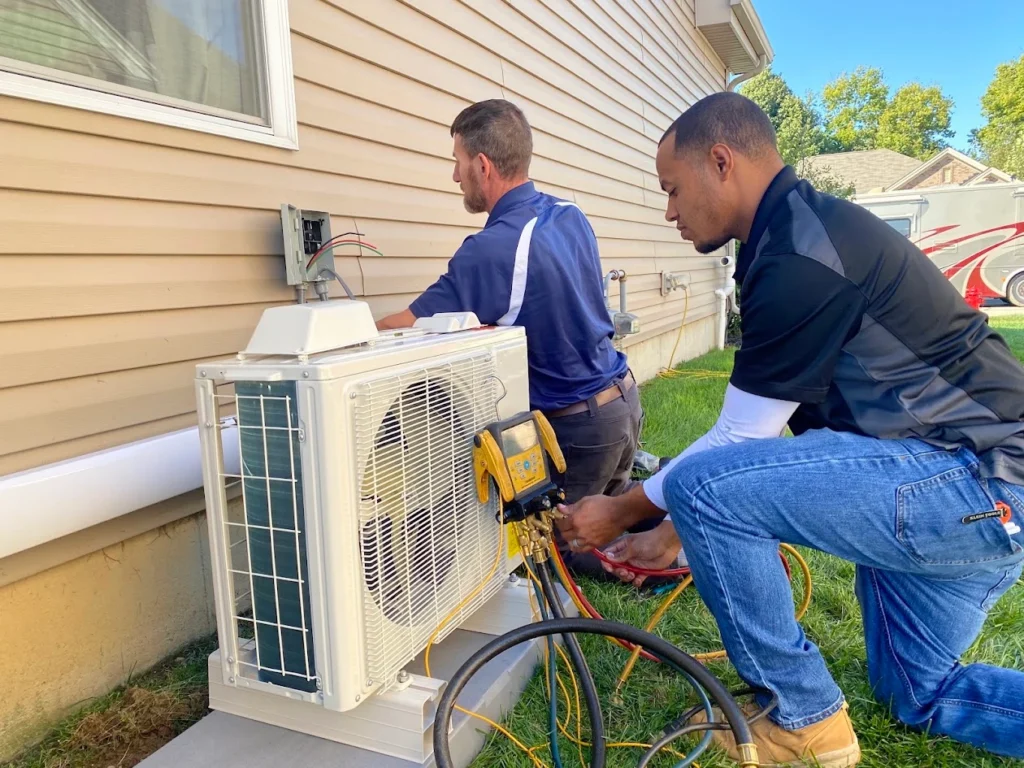
Can a Ductless Mini-Split Be Relocated During Replacement?
A ductless mini-split condenser or indoor air handler can often be moved during replacement, but the project may require wall repair, a new condensate route, updated communication wiring, and modified refrigerant lines. The installer must confirm that the new indoor and outdoor locations meet the mini-split manufacturer’s requirements.
Plan Your AC Relocation & Replacement With Logan Services
Replacing your air conditioner is an ideal time to move the outdoor unit for a home addition, remodel, patio, or deck project. Logan Services can evaluate the proposed location to ensure your new system has the airflow, clearance, drainage, and service access it needs for reliable performance.
Our local teams help homeowners make informed HVAC decisions throughout Dayton, Columbus, Cincinnati, and Northern Kentucky. Contact Logan Services to schedule a free, same-day estimate and discuss the best location for your new air conditioner.
Frequently Asked Questions About Moving an AC Unit During Replacement
No, the work requires safe electrical disconnection, compliant refrigerant recovery, sealed-system procedures, and model-specific startup testing. Hire a qualified HVAC professional because moving the system is a complex task, and DIY work can cause damage to the equipment or your home.
The allowable distance depends on the air conditioner’s model, line-set size, total line length, vertical rise, and refrigerant requirements. Some relocations are only a short distance, such as a few feet away, but can still require line, electrical, and pad changes. An HVAC professional should calculate the proposed layout using the manufacturer’s installation instructions.
Permit and inspection requirements vary by city, township, and county. Because relocation may change electrical and refrigerant connections, contact the HVAC contractor and verify local code requirements for your Dayton, Columbus, Cincinnati, or Northern Kentucky community before work begins.
Relocation may affect warranty coverage if the work does not follow manufacturer requirements or if damage occurs during the move. Review the warranty terms and keep the contractor’s installation and service documentation.
An air conditioner can be relocated during cooler weather, but outdoor temperature may limit final cooling tests. The contractor should explain how the system will be commissioned and whether a return visit is needed when conditions allow full performance testing.

