Cooling
 Heating
 Plumbing
 Sewer + Drains
 Air Quality
 Coupons
 About Us



Signs You May Need Sewer Line Repair or Replacement
Sewer line damage often affects more than one fixture. A single slow sink may have a local clog. Several slow or backed-up drains may point to a problem in the main sewer line.
Contact a sewer and drain professional if you notice:
- Several slow drains: Sinks, tubs, showers, and toilets may drain slowly when the main sewer line is blocked.
- Clogs that keep returning: A clog that comes back after cleaning may be caused by roots, buildup, or pipe damage.
- Sewage backups: Wastewater may come through a basement drain, shower, tub, or toilet when the sewer line cannot drain.
- Gurgling drains or toilets: These sounds may be caused by trapped air behind a blockage.
- Sewer odors: A damaged pipe or failed connection can allow sewer gas to escape.
- Wet or sunken areas in the yard: A leaking pipe can soak the surrounding soil. The area may become soft, sunken, or greener than the rest of the yard.
- Pest problems: Sewer leaks and broken pipes can attract insects and rodents.
These signs do not always mean you need a new sewer line. Sewer line cleaning or hydro jetting may clear the problem if the pipe is still in good condition.
A camera inspection shows us what is happening inside the line. We use those findings to recommend the right service.
Common Causes of Sewer Line Issues in Ohio Homes
Ohio sewer lines can be damaged by aging materials, tree roots, clogs, and shifting soil. Finding the cause helps us decide whether the line needs cleaning, repair, or replacement.
Aging Sewer Pipes
Older Ohio homes may have sewer lines made from clay, cast iron, Orangeburg, or early PVC. Each material can develop different problems as it ages.
Clay joints can separate and let in roots. Cast iron can rust, crack, or collect waste on rough walls. Orangeburg may flatten or collapse, and PVC can shift or separate if poorly installed or affected by moving soil.
Older pipes are not always damaged. A camera inspection helps us check their condition before we recommend work.
Tree Roots in Sewer Lines
Tree roots seek moisture and can enter sewer lines through cracks, loose joints, or damaged connections.
Inside the line, roots grow and trap waste, slowing wastewater flow and causing repeat clogs.
Hydro jetting may remove roots if the pipe is strong enough, but it will not seal the entry point. Damaged sections may need repair to prevent regrowth.
Clogs and Internal Blockages
Grease, wipes, hygiene products, paper, and minerals can build up in sewer lines, narrowing or blocking the pipe.
A severe clog can push wastewater back through the home’s lowest drain, often a basement floor drain, shower, tub, or toilet.
Professional cleaning may help if the pipe is intact. Repeated clogs in one area may need a camera inspection to find a deeper issue.
Freeze-Thaw Cycles and Shifting Soil
Ohio’s freeze-thaw cycles cause the ground to expand and contract. Clay soil also changes as it becomes wet or dry.
This movement can place pressure on buried sewer pipes. It may separate pipe joints, change the line’s slope, or damage weak sections.
A low or sunken area in the pipe can hold wastewater and debris. More serious soil movement may crack or collapse the line.
Logan Services’ Sewer Line Repair Methods
Logan Services starts with the least disruptive option that can solve the confirmed problem. Our sewer and drain team uses cameras and cleaning tools to determine whether the line can be restored or needs excavation.

Video Camera Inspections
A sewer camera inspection lets us view the inside of the line without digging first. The camera can show roots, buildup, cracks, loose joints, rust, standing water, and collapsed sections.
It also helps us find the problem’s location. We review the camera findings with you before discussing repair or replacement.
Hydro Jetting
Hydro jetting uses high-pressure water to clean the inside of a pipe. It can remove grease, sludge, mineral deposits, and some tree roots.
Unlike some drain-cleaning methods, hydro jetting cleans buildup from the pipe walls. This can improve flow and reduce repeat clogs.
We check the pipe before hydro jetting. A weak, cracked, or collapsed pipe may not be safe to clean this way. If the inspection shows pipe damage, we will explain your repair options.

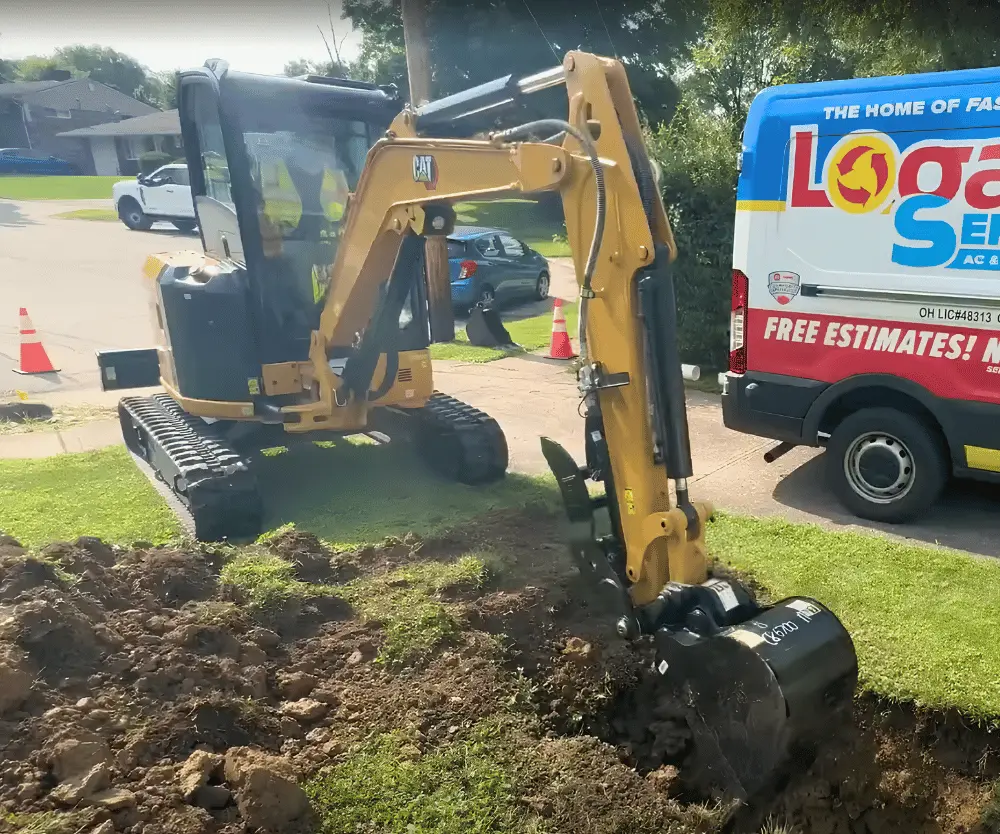
Traditional Excavation
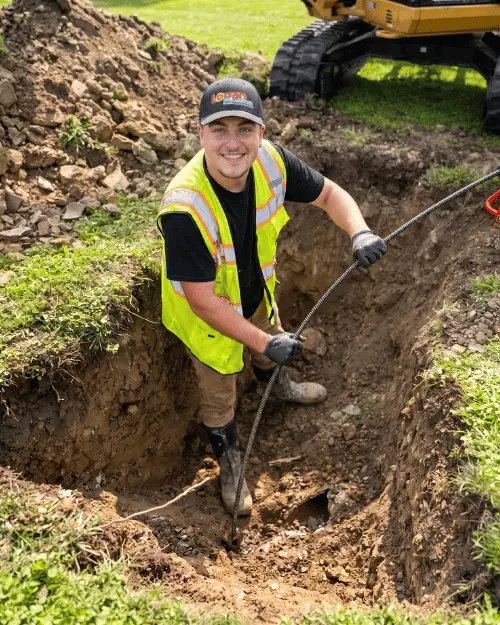
Some sewer problems require digging to reach the damaged pipe. Logan Services uses traditional trench excavation for small repairs and full sewer line replacements.
A spot repair may make sense when the damage affects one section, and the rest of the pipe is in good condition. We may recommend full replacement when damage affects much of the line. Replacement may also be the better choice when repeated repairs will not solve the problem.
Our Sewer Line Replacement Process
Logan Services follows a clear sewer replacement process so you understand the problem, the recommended work, and what to expect.
We Inspect the Sewer Line
We use a camera inspection to find clogs, cracks, roots, rust, standing water, loose joints, or collapsed sections before quoting replacement.
We Find the Damaged Area
We locate the affected pipe and the section that needs repair or replacement.
Utilities are marked before digging to help protect gas, electric, water, and communication lines.
We Explain Your Options
We review the camera footage and explain whether cleaning, spot repair, or full replacement is the best option.
Our recommendation considers the pipe’s age, material, depth, location, condition, and sewer history.
We Provide an Estimate
Your estimate outlines the work and cost, based on factors such as pipe length, depth, permits, repair area, and surface conditions.
Free estimates are available for qualifying sewer repair and replacement projects.
We Coordinate Project Requirements
Sewer work may require permits, inspections, utility marking, or local city or sewer department approval.
Requirements vary by community, and our team explains what applies to your project.
We Excavate the Repair Area
Our crew digs a trench sized to the pipe’s location, depth, and damage.
Before work starts, we plan the excavation area and explain possible effects on your yard, driveway, sidewalk, or other surfaces.
We Remove the Damaged Pipe
We remove the failed pipe and install new pipe with proper slope and secure connections.
The final replacement scope depends on the damage and local ownership rules.
We Test the New Line
We test the new pipe and connections to confirm wastewater flows properly.
Required local inspections are completed before the trench is closed.
We Backfill the Trench and Clean the Area
After testing and approval, we backfill the trench and clean the work area.
Final grass, landscaping, concrete, or pavement repairs depend on the project agreement.
We Complete a Final Walkthrough
We review the completed work, answer questions, and explain how the replacement fixed the sewer problem.
Plumbing Financing for an Unexpected Sewer Line Repair
No one plans for a broken or collapsed sewer line. When a major repair or replacement becomes necessary, concerns about the cost can add more stress to an already difficult situation.
Logan Services offers plumbing financing options to help make the expense more manageable. Qualified homeowners can take advantage of 0% APR financing for up to 60 months†, allowing you to divide the project cost into predictable monthly payments instead of paying the full amount at once.
Our team will explain your financing options before work begins so you can choose a payment plan that fits your budget. With a system for every home and budget, Logan Services helps you move forward with greater confidence and peace of mind.
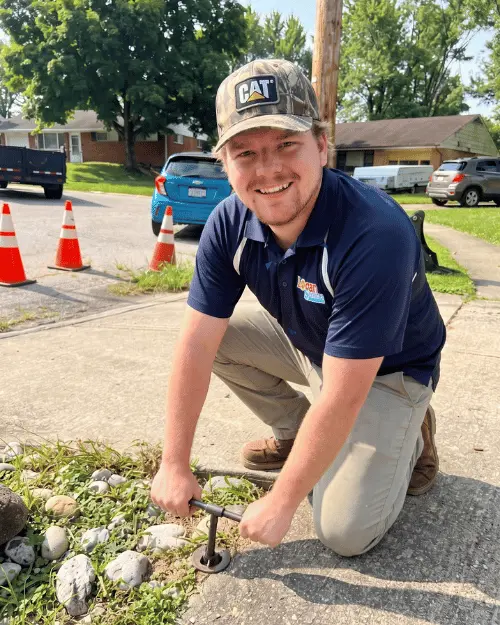
Why Choose Logan Services for Sewer Line Repair and Replacement?
Logan Services has been bringing comfort home since 1969. Our local plumbing and sewer teams serve homeowners throughout Dayton, Columbus, Cincinnati, and nearby Ohio communities.
Homeowners choose Logan Services for:
- Camera-based diagnosis: We inspect the sewer line before recommending major repairs or replacement.
- Free estimates: You receive an estimate based on the pipe’s condition and the work required.
- Free second opinions: We can review another company’s sewer repair or replacement recommendation at no cost.
- Residential sewer experience: Our team understands the sewer materials and soil conditions found around Ohio homes.
- Several service options: We provide camera inspections, sewer cleaning, hydro jetting, spot repairs, and full replacement.
- Clear communication: We show you what the camera found and explain why we recommend a service.
- Local service: We have teams serving the Dayton, Columbus, and Cincinnati areas.
- Respect for your property: We plan the excavation area and complete a thorough cleanup after the work.
Your comfort is our priority. We base our recommendations on what we can see inside the line, not on guesswork.
Contact Logan Services for a Free Estimate or Second Opinion Today
A damaged sewer line will not fix itself. Finding the problem early may help you address a clog or small repair before it causes another wastewater backup.
Request a free estimate for sewer line repair or replacement. If another company has recommended an expensive sewer project, request a free second opinion before you commit to the work.
Call (800) 564-2611 to contact the Home of Fast, Friendly Service.
Sewer Line Repair and Replacement FAQs
Who Is Responsible for the Sewer Line—the Homeowner or the City?
Responsibility depends on local rules. Homeowners are often responsible for the private sewer line that connects the house to the public sewer, but the exact boundary varies by community.
Contact your city or sewer department before scheduling work. The department can explain ownership, reporting rules, and any programs that may help with repairs.
How Much Does Sewer Line Replacement Cost?
Cost depends on the line’s length, depth, material, and location. Permits and surfaces above the pipe, such as landscaping, concrete, or a driveway, can also affect the price.
Logan Services inspects the pipe with a camera before providing a quote. Estimates are free.
How Long Does Sewer Line Repair Take?
A small repair may take one day. Full replacement may take several days based on the pipe’s length, depth, location, weather, permits, and local inspections.
We will explain the expected schedule after inspecting the line and confirming the work needed.
How Do I Know Whether to Repair or Replace My Sewer Line?
Repair may be the right choice when damage affects one section and the rest of the pipe is in good condition. Replacement may make more sense when the line has several damaged areas, severe rust, poor slope, repeated root problems, or a full collapse.
A camera inspection provides the information needed to compare both options.
Does Homeowners Insurance Cover Sewer Line Replacement?
Standard homeowners insurance may not cover damage caused by age, rust, roots, or normal wear. Coverage may apply when damage results from a covered event or when your policy includes service-line protection.
Review your policy and contact your insurance company before work begins. Ask about coverage, deductibles, and the documents needed for a claim.
FINANCING DISCLAIMER: †The Wells Fargo Home Projects credit card is issued by Wells Fargo Bank, N.A., an Equal Housing Lender. Special terms apply to qualifying purchases charged with approved credit. The special terms APR will continue to apply until all qualifying purchases are paid in full. The monthly payment for this purchase will be the amount that will pay for the purchase in full in equal payments during the promotional (special terms) period. The APR for Purchases will apply to certain fees such as a late payment fee or if you use the card for other transactions. For new accounts, the APR for Purchases is 28.99%. If you are charged interest in any billing cycle, the minimum interest charge will be $1.00. This information is accurate as of 01/01/2026 and is subject to change. For current information, call us at 1-800-431-5921. Offer expires 8/31/2026.