

 Cooling
 Heating
 Plumbing
 Sewer + Drains
 Air Quality
 Coupons
 About Us
Updated July 17, 2026
When Canadian wildfire smoke reaches Ohio, it can affect more than the view outside your window. Fine particles can enter your home, irritate your lungs, and make it harder for your family to feel comfortable indoors.
At Logan Services, your comfort is our priority. We created this guide to help homeowners across Dayton, Columbus, and Cincinnati understand the 2026 Canadian wildfires, monitor local air quality, and take practical steps to protect the air inside their homes.
Smoke conditions can change quickly based on wind and weather patterns. Check your local Air Quality Index regularly and use the information below to make informed decisions for your household.
Call (800) 564-2611 today to learn how Logan Services’ indoor air quality products can help you create a safer, cleaner home environment.
Why Is Canadian Wildfire Smoke Affecting Ohio?
Smoke from wildfires in Canada can travel hundreds or thousands of miles through the atmosphere. When weather patterns carry that smoke into the Ohio Valley, fine particles can reach ground level and affect air quality in Dayton, Columbus, Cincinnati, and surrounding communities.
Wildfire smoke contains fine particulate matter known as PM2.5. These particles are small enough to travel deep into the lungs and may worsen asthma, allergies, and other heart or respiratory conditions.
View Current Air Quality Levels in Ohio
We advise you to monitor your local air quality reports and take necessary precautions. Forecasted daily air quality levels may also vary from current levels.
How Can Wildfire Smoke Affect Your Family?
Wildfire smoke can irritate the eyes, nose, throat, and lungs.
People who may experience stronger effects include:
- Children
- Older adults
- Pregnant people
- Outdoor workers
- Individuals with asthma, COPD, heart disease, or other chronic conditions
Common symptoms include:
- Coughing
- Wheezing
- Shortness of breath
- Irritated eyes
- Sore throat
- Headaches
- Unusual fatigue
Can Wildfire Smoke Enter Your Home?
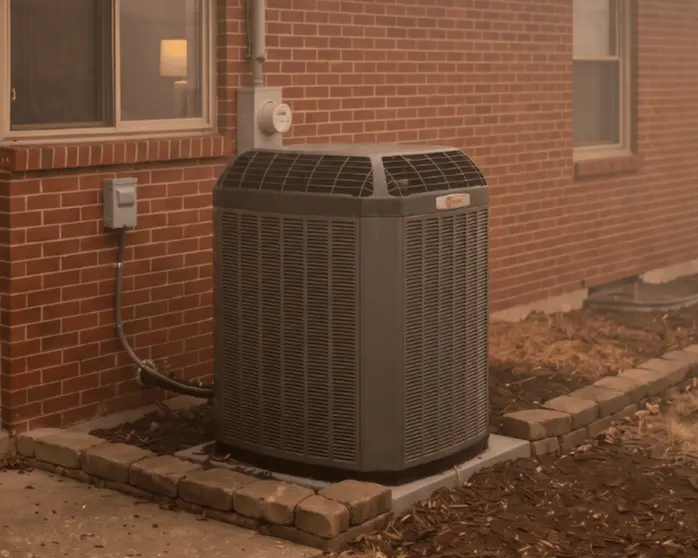
Yes. Smoke can enter through open doors and windows, exhaust vents, gaps around the home, and outdoor-air intakes.
Your HVAC system can help manage indoor air when it has the right filter, proper airflow, and well-maintained ductwork. However, every home and comfort system is different, so filtration products should be selected based on the equipment’s specifications.
How Can You Protect Your Indoor Air Quality?
When outdoor air quality is poor, keep windows and doors closed and set your HVAC system to recirculate indoor air. Check your filter and replace the HVAC filter if it is dirty, but do not install a higher-efficiency filter until you confirm that your equipment can support the added airflow resistance.
You can also:
- Check the local AQI before opening windows or exercising outside.
- Run a properly sized portable HEPA air cleaner in frequently used rooms.
- Avoid smoking, burning candles, or creating unnecessary indoor particles.
- Limit exhaust fan use when outdoor smoke is heavy.
- Keep pets indoors except for short bathroom breaks.
- Change clothes and shower after extended outdoor exposure.
These steps can help create a cleaner and more comfortable space while smoke remains in the area.
Which Home Comfort Solutions Can Help With Wildfire Smoke?
Particle filtration is the primary way to reduce smoke particles circulating through your home. The best option depends on your current HVAC system, filter cabinet, ductwork, airflow, and household needs.
Whole-Home Air Cleaners
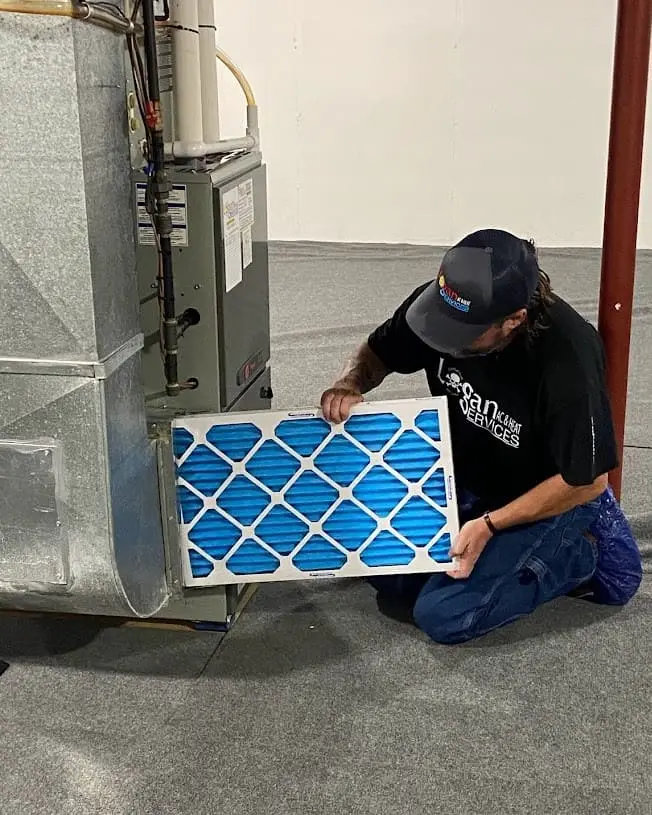
Whole-home air cleaners capture airborne particles as your heating and cooling system circulates air. These products can provide broader coverage than a single-room unit when they are properly matched and installed.
High-Efficiency HVAC Filters
A higher-efficiency HVAC filter may capture more smoke particles than a standard fiberglass filter. However, using a filter that is too restrictive can reduce airflow and place added strain on your equipment.
Portable HEPA Air Cleaners
Portable HEPA air cleaners can provide additional filtration in bedrooms, living rooms, and other frequently used spaces. Choose a unit rated for the room size and avoid products designed to produce ozone.
Duct Sealing and Repair
Leaky return ducts can pull air and particles from attics, crawl spaces, garages, and other unfinished areas. Repairing damaged ductwork or sealing leaking air ducts can help reduce unwanted air infiltration while supporting more consistent home comfort.
Benefits of Indoor Air Quality Upgrades
By enhancing your home’s air purification system, you can:
- Reduce allergy and asthma symptoms
- Improve sleep and cognitive function
- Protect your HVAC system from buildup and strain
- Feel confident that your family is breathing cleaner air
Does Wildfire Smoke Mean You Need a New Air Conditioner?
Wildfire smoke alone does not mean your air conditioner needs to be replaced. Start by checking the filter, monitoring airflow, and confirming that the system is cooling normally.
Professional air conditioner maintenance may help if your system struggles to maintain comfort, has weak airflow, runs continuously, or cannot support effective filtration. Our team can help determine whether maintenance, duct repairs, indoor air quality products, or air conditioner replacement make the most sense for your home.
Logan Services Is Here to Help Ohio Families Breathe Easier
For more than 55 years, Logan Services has helped Ohio families create safer, more comfortable homes. Our team understands that poor outdoor air quality can create added concerns, especially for households with children, older adults, pets, or family members with respiratory conditions.
We can evaluate your existing HVAC system and provide clear guidance on filters, whole-home air cleaners, ductwork, and other indoor air quality solutions. We will help you understand your options without recommending products your home does not need.
Your Comfort Is Our Priority. Call (800) 564-2611 or book online to ensure your home is breathing fresh air.
2026 Canadian Wildfires & Ohio Air Quality: Frequently Asked Questions
Smoke from Canadian wildfires travels south on wind currents, carrying pollutants like PM2.5 into Southern Ohio, affecting cities such as Dayton, Columbus, and Cincinnati.
Experts recommend limiting outdoor activities when the AQI is above 50, especially if you have asthma, heart disease, or other respiratory conditions.
Yes. Wildfire smoke can enter homes through small cracks, ventilation systems, and open windows, making indoor air just as polluted without proper filtration.
Install high-efficiency air cleaners, whole-home air purifiers, and UV lights through your HVAC system to actively remove airborne pollutants and contaminants.
Yes. Logan Services offers free estimates on indoor air quality products throughout Southern and Central Ohio.
With more frequent wildfire smoke events, upgrading ensures your home remains a safe, clean environment, even when outdoor air quality drops.

