 Locations
 Cooling
 Heating
 Plumbing
 Sewer + Drains
 Air Quality
 Coupons
 About Us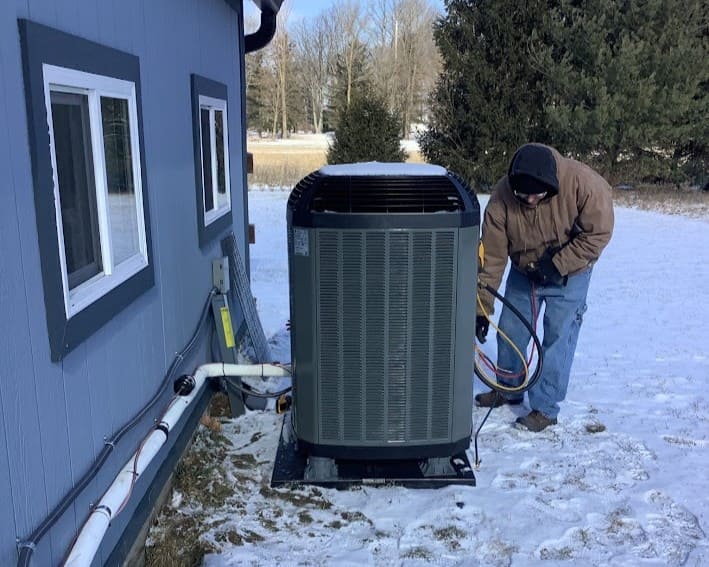
The Short Answer: Auxiliary heat turns on automatically to support your heat pump in extreme cold, while emergency heat must be turned on manually and should be used only when the heat pump cannot run.
Before temperatures plunge, it helps to know how your heat pump system reacts to extreme cold. When winter weather in Dayton, Columbus, or Cincinnati pushes temperatures far below freezing, the system must work harder to maintain indoor heat. This drop makes it harder for the heat pump to pull heat from the outside air. It can trigger aux heat, use more energy, and cause the outdoor unit to enter defrost mode.
Understanding these changes during an arctic blast can help you stay calm, adjust thermostat settings, and spot the difference between normal behavior and a problem that needs service.
Suspect something is wrong with your heat pump’s auxiliary heat? Call Logan Services at (800) 564-2611 for expert service today.
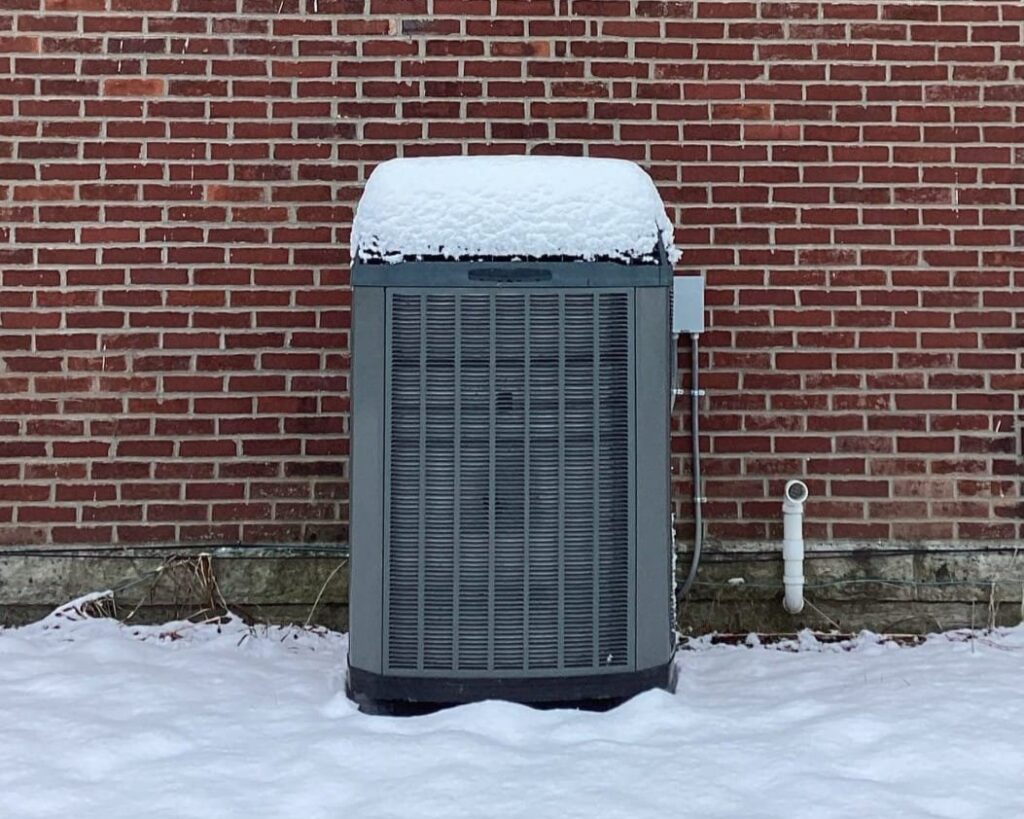
Why Heat Pumps Behave Differently During an Arctic Blast
An arctic blast puts extreme stress on your heat pump because the outside air holds very little heat. As temperatures drop, the system may struggle to bring in enough warmth. This can result in colder rooms and a greater chance of frozen pipes. When this happens, the system turns to backup heating to keep your home warm. Knowing how aux heat and emergency heat work helps you understand what’s normal in this weather and when the system may need attention.
Auxiliary Heat and When Supplemental Heat is Needed
Auxiliary heat (often shown as AUX on the thermostat) turns on automatically when the heat pump needs help reaching your set temperature. It works as a backup heat source, using electric heat strips in the indoor unit to add extra warmth during extreme cold.
AUX heat is normal during:
- Sudden temperature drops
- Morning warm-up cycles
- Long periods of freezing or below-zero temperatures
- Defrost cycles that melt ice off the outdoor unit
While auxiliary heat uses more energy and can raise your electric bill, it is meant to support your heating system during very cold weather and help keep heat from escaping your home.
Why Can’t My Heat Pump Reach the Set Temperature?
During an arctic blast, your heat pump may struggle to reach the thermostat set point because the outside air is too cold for efficient heat transfer. When the temperature drops several degrees below freezing, the system may need to run longer. It may also rely on aux heat to help maintain indoor heat.
If your home still cannot reach the set temperature, the cause may be heat loss, blocked airflow, or snow and ice on the outdoor unit. Checking thermostat settings, clearing the outdoor unit, and improving airflow can help the system perform better.
Even a new system may struggle in extreme cold—this is expected during severe winter weather.
How Emergency Heat Works and When to Use It
Emergency heat (EM Heat) must be turned on manually at the thermostat. This mode bypasses normal heat pump operation and relies only on the backup system and electric heating parts. When you turn on emergency heat, it shuts off the heat pump and uses the electric heat strips—or a furnace in a dual fuel system—as the only heat source.
Use emergency heat only when:
- The heat pump is not turning on
- The outdoor unit is frozen solid
- The system is making unusual noises or short-cycling
- You suspect a malfunction and need temporary heat
Emergency heat is not meant for regular cold weather. It uses much more energy, so turn it off once the heat pump is fixed.
Using EM Heat to Prevent Frozen Pipes
Emergency heat can help prevent frozen pipes during an arctic blast by keeping indoor temperatures steady when the heat pump cannot keep up. If the outdoor unit cannot pull enough heat from the cold air, indoor temperatures may drop too low. Turning on emergency heat keeps the backup heating system running so your home stays warm enough to protect plumbing in colder rooms and areas with more heat loss.
Homeowners should use emergency heat if the heat pump is struggling, the house feels noticeably colder, or the thermostat shows a falling indoor temperature despite the system running. While this mode uses more energy, it provides essential protection during extreme cold and should be turned off once normal heat pump operation resumes.
Key Differences Between Auxiliary Heat and Emergency Heat
| Auxiliary Heat | Emergency Heat | |
|---|---|---|
| How It Activates | Automatically | Manually by homeowner |
| When It Activates | When the heat pump needs help in cold weather | When the heat pump cannot run or is unsafe to run |
| Energy Use | Higher than typical heat pump use, but lower than EM heat | Highest energy use |
| Purpose | Supplemental | Full system backup |
Why AUX Heat Activates More When Your System Faces Extreme Cold
When temperatures fall below 30°F—and especially below 20°F—the heat pump loses efficiency. Auxiliary heat fills the gap to keep the home warm. This does not mean your system is failing; it is doing what it is designed to do.
Normal AUX Heat Use:
- AUX displays during early morning hours
- AUX runs during defrost cycles
- AUX activates when outdoor temps drop to single digits
Abnormal AUX Heat Use:
- AUX displays during early morning hours
- AUX runs during defrost cycles
- AUX activates when outdoor temps drop to single digits
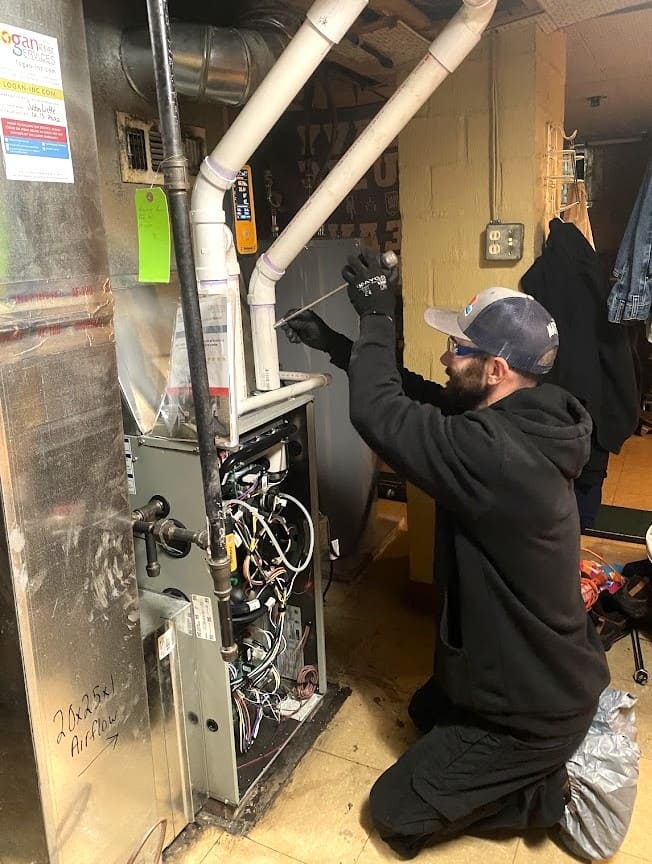
How a Dual-Fuel System Supports Your Heat Pump System in Extreme Cold
A dual-fuel system uses a heat pump and a gas furnace together. This setup lets the HVAC system switch between heating sources to save money and reduce strain when the heat pump cannot heat well in winter. During extreme cold, the gas furnace often takes over because it can produce stronger and steadier heat. This reduces the need for electric heat strips and helps keep energy costs lower.
How to Know If You Accidentally Turned On Emergency Heat
If your thermostat reads Emergency Heat or EM Heat, you may have switched modes without realizing it.
Check for:
- A manual switch on the thermostat that is set to EM Heat
- A sudden spike in energy usage
- Noticeably hotter air from the vents
To return to normal heat, set the thermostat back to Heat.
How the Defrost Cycle Protects the Outdoor Unit and Uses Aux Heat
During very cold weather, frost forms on the outdoor unit due to moisture freezing on the coils, especially when snow and cold air surround the equipment. Your heat pump automatically enters a defrost cycle to melt this ice. While in defrost mode, the system temporarily blows cooler air inside. Auxiliary heat compensates for this until the cycle ends, helping maintain indoor heat while the outdoor unit is in defrost mode and ensuring rooms stay warm even when temperatures drop several degrees below normal.
Signs Your Heat Pump Is Stuck in Defrost Mode
- The outdoor unit stays covered in ice or frost for more than 30 minutes.
- Steam rises from the outdoor unit continuously rather than briefly.
- The indoor air stays cool for a long period instead of warming back up.
- AUX heat runs nonstop even after temperatures stabilize.
- The fan on the outdoor unit does not turn back on after the defrost cycle ends.
If you notice these signs, the system may not be exiting defrost mode correctly, and a heating expert should inspect the unit.
When to Call for Service if Your Indoor Unit or Outdoor Unit Struggles in Extreme Cold
Contact Logan Services for expert heat pump repairs if:
- Emergency heat is the only mode that produces heat
- The heat pump will not turn on
- Ice covers the entire outdoor unit
- AUX heat runs nonstop even when temperatures warm up
Our team can diagnose and repair refrigerant issues, airflow restrictions, failing components, thermostat problems, and more quickly.
Need Help With Your Heat Pump?
If your home isn’t staying warm or your heat pump is struggling during extreme cold, our team can help.
Call Logan Services at (800) 564-2611 to keep your heat pump running all winter long.
Frequently Asked Questions About Auxiliary Heat and Emergency Heat
Yes, AUX heat often turns on when outdoor temperatures drop below freezing because the heat pump cannot extract enough heat from the air. It may also activate during defrost mode, morning warm‑ups, or when the thermostat set point is several degrees above the room temperature. This is expected behavior in extreme cold.
Only if the heat pump is not running or cannot reach the set temperature. Emergency heat forces the system to rely on electric heat strips or a furnace as the only heat source, which uses more energy. Use it temporarily if the outdoor unit is frozen, making unusual noises, or failing to operate.
AUX heat and emergency heat use more energy than normal heat pump operation because electric heat strips require a high amount of electricity to produce indoor heat. During very cold weather, the system may run longer, trigger AUX heat more often, and enter defrost cycles, all of which increase electricity cost.
A dual-fuel system switches from the heat pump to the gas furnace automatically in extreme cold. The furnace becomes the primary heat source when the heat pump loses efficiency, helping maintain comfort, protect against frozen pipes, and reduce the need for backup heating.